
MenuClose
- If life's at risk When there's immediate danger to life. Call 999
- Samaritans Free to call, any time, for anyone struggling. Call 116 123
- Prefer to text? Free and confidential, any time. Text SHOUT to 85258
- NHS 111 in England and Wales Choose option 2 for mental health. Free, 24 hours a day. Call 111
- NHS 24 in Scotland Choose the mental health option. Free, 24 hours a day. Call 111
What a mentally healthy golf club looks like
A picture of what it looks like day to day, and the arrangements behind it.
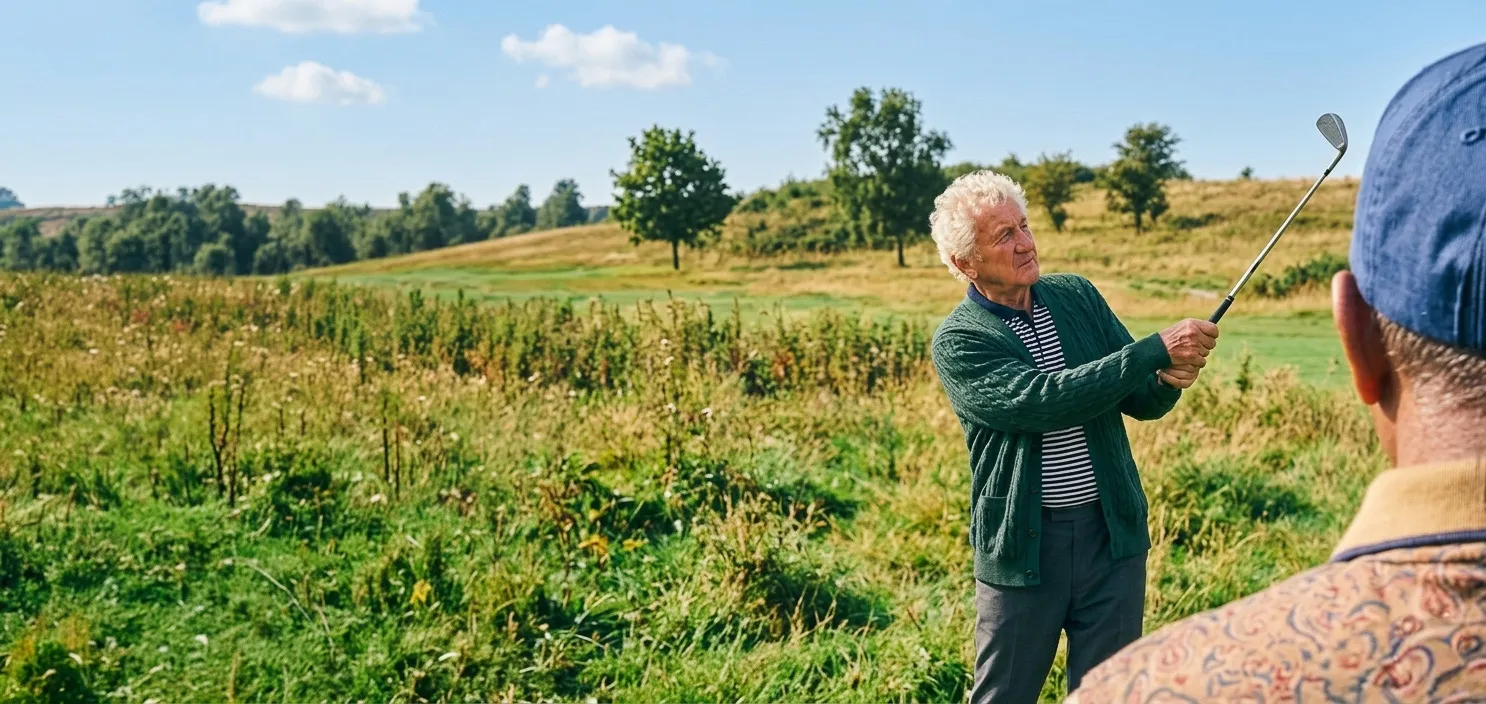
Every club has its own character, but the mentally healthy ones tend to have a few things in common. You can feel it when you walk in: people are welcomed, looked out for, and comfortable being themselves. And behind that feeling sit a few simple things the club has deliberately put in place.
This page paints a picture of what that looks like on an ordinary day, what's behind it, and what it can add up to for the people at your club.
A day at a mentally healthy club
- 6:30am
The greenkeepers' shed
What you'd notice
Before heading out, the head greenkeeper asks the team how they're doing. One of them admits it's been a heavy week, and it gets talked about, not brushed off, and the week's jobs get shared out differently.
Behind the scenes
Staff wellbeing is part of how the team is managed. People know they can raise it without it counting against them.
- 8:00am
The first tee
What you'd notice
A new member who doesn't know anyone is hovering by the tee. A regular group spots them and asks them to join.
Behind the scenes
A simple way of welcoming new members and pairing them up, so nobody's left to work it out alone.
- 11:00am
The pro shop
What you'd notice
A member buying a sleeve of balls to replace the ones in the lake mentions it's been a rough few weeks. The assistant pro listens, and knows where to point them if they want more support.
Behind the scenes
Staff and volunteers know the basics of what to say, and support details are kept to hand.
- 1:00pm
The clubhouse noticeboard
What you'd notice
Support information sits right next to the fixture list, and there's a line about it in this month's newsletter.
Behind the scenes
Support is visible before anyone needs it, with a named contact people can go to.
- 5:00pm
The bar after a round
What you'd notice
Plenty of banter, but nobody's mental health is the punchline. Someone notices a mate has gone quiet and checks in, over a pint or a coffee.
Behind the scenes
A culture set from the top, where the way people talk is taken seriously.
- 7:30pm
The committee meeting
What you'd notice
Wellbeing is a standing item on the agenda. Nobody's health is discussed or minuted without their agreement.
Behind the scenes
Leadership backing, an agreed plan, and clarity on who does what, including where a concern goes if someone's safety is at risk.
What sits behind it
Mental health is a normal part of club life
It's talked about plainly, in conversation and in club communications.
Everyone feels connected
Newcomers are welcomed, and nobody's left on the edges.
The people who keep it running are looked after
Staff and volunteer wellbeing is taken as seriously as the state of the greens.
Support is easy to find
It's visible before anyone needs it, not buried in a folder.
People know what to do when someone needs help
Who to go to, what to say, and how to keep it private, unless someone's safety is at risk.
None of this needs a big budget or a team of experts.
What it isn't
A mentally healthy club isn't:
It's an ordinary club that has thought about this in advance.
a club where nobody ever has a hard time
full of counsellors
policing every word at the bar
expensive to run
a replacement for professional help
What it all adds up to
The aim isn't just a friendlier club. It's a real difference to people's mental health.
Less stigma
People can talk about mental health without worrying about being judged or treated differently.
Better understanding
People know more about mental health, notice when someone might not be themselves, and feel confident offering support.
Stronger connections
People feel they belong, and fewer end up struggling on their own. Feeling connected to others is one of the most important protective factors for mental health.
Earlier help
People know where to turn, and ask for support before things reach crisis point.
Better everyday wellbeing
Members, staff and volunteers feel better for being part of the club.
Lives protected
Suicide is complex, and no club can prevent it alone. But less stigma, stronger connections and earlier help are all linked to lower risk, and clubs can play a real part.
Good for the club, too
Looking after people is also good for the club itself.
People stick around
Members, staff and volunteers who feel looked after and part of something are more likely to stay, get involved, and bring others with them.
A better place to work and volunteer
In 2024/25, 964,000 workers in Great Britain reported stress, depression or anxiety caused or made worse by work. Deloitte estimates employers who invest in workplace mental health see an average return of £4.70 for every £1. Clubs are employers too.
Reputation
A club that visibly takes its people seriously gets talked about, by members, by prospective ones and by the local community.
The next generation of members
People increasingly choose where to spend their time based on how it makes them feel. A club that's known for welcoming people and looking after them has a lot to offer new and younger members.
Sources: Health and Safety Executive (2025); Deloitte, Mental health and employers (2024).
So where do you start? It's smaller than you might think.
This is what the Florio Club Commitment helps your club build.
It's free, and its ten steps take you there one at a time, at your own pace.
Need help now?
If life's at risk Call 999
See all help lines
Need help now?Close
Need help now?
- If life's at risk When there's immediate danger to life. Call 999
- Samaritans Free to call, any time, for anyone struggling. Call 116 123
- Prefer to text? Free and confidential, any time. Text SHOUT to 85258
- NHS 111 in England and Wales Choose option 2 for mental health. Free, 24 hours a day. Call 111
- NHS 24 in Scotland Choose the mental health option. Free, 24 hours a day. Call 111